 PPTF
PPTFTradeLocker for prop: a browser instead of a terminal
TradeLocker for prop is the youngest of the widespread engines: it is built for the browser and the phone. We work out what that gives the trader, why such programmes are cheaper to launch and where that simplicity reaches its limit.
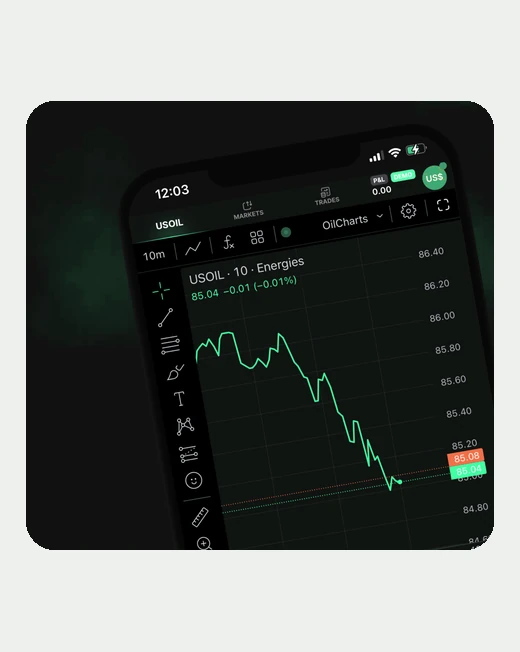
TradeLocker prop firms: why new programmes choose the engine
It comes down to the economics of launching. A MetaTrader licence for a prop firm is expensive and needs infrastructure, while a browser engine connects quickly and costs less. So the environment turns up more often at young programmes and at those keeping a low challenge price.
For the trader the first effect is pleasant: nothing to install, the account opens in the same tab as the client area, and the mobile version is not cut down relative to the browser one. The second effect is the other side of the same thing: the feature set is minimal, and the firm cannot extend it.
- Runs with no installation
- The platform lives in the browser and the profile is stored on the firm's side. Changing device requires no transfer of templates.
- The mobile scenario is the main one
- The app here is not an add-on but a full interface. For trading from a phone it is the most convenient of the prop environments.
- Its own automation environment
- MetaTrader code does not carry over, but the platform has a tool of its own — TradeLocker Studio: by the description on its site it allows strategies to be automated and tested, and there is a catalogue of ready-made bots.
What that means for a prop account
The simplicity of the environment changes not the rules but your work with them: some of what the terminal does in MetaTrader you will have to do yourself here.
What to clarify before buying
Three things that in a browser environment can only be established in advance.
Browser platforms sometimes lag on quote updates at the moment of a data release. It is tested on the programme's demo account, not through reviews.
only in practiceThe profile and the history sit on the firm's side. If access to the client area ends, there will be nowhere to take an export from — save it stage by stage.
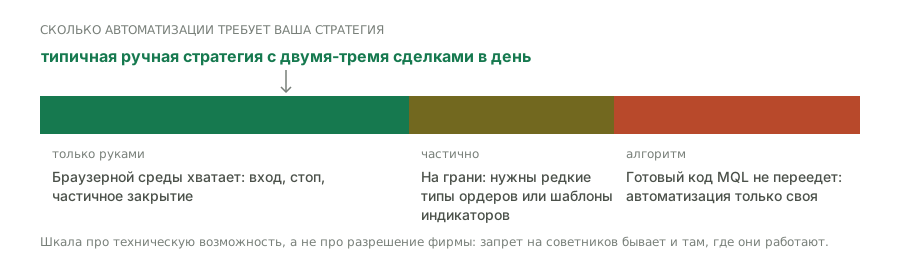
save it at onceThe set is more modest than MetaTrader's: some pending and conditional orders may be missing. If your strategy rests on them, that is a stopper.
check the listFrequently asked questions
What is TradeLocker?
A browser trading platform built for prop firms and brokers. Nothing has to be installed: the account, the charts and the client area open in one tab, and the mobile app repeats the same interface.
Why do cheap challenges so often use TradeLocker?
Because connecting such an environment costs a firm less than infrastructure around MetaTrader. Saving on the launch lets it keep the price of an attempt low.
Do advisors run here?
MetaTrader advisors do not — the platform does not execute MQL. It has its own automation: TradeLocker Studio, by the description on its site, automates and tests strategies, and there is a catalogue of bots. Finished code will have to be rewritten for this environment.
Is it convenient to trade from a phone?
That is the environment's strong point: the mobile interface is full rather than cut down. If a strategy needs watching during the day, it is a workable option.
How does TradeLocker Studio differ from an MQL advisor?
It is a tool of the platform rather than the execution of someone else's code: a strategy is described and tested inside the environment, and MQL libraries do not run there. The practical conclusion is the same — a finished advisor cannot be moved across, but you need not go without automation altogether.
How do I work out size in this environment?
By hand and in advance: there is no size calculator inside. You need the pip value from your own programme's specification and the daily limit — after that it is ordinary arithmetic.
What about the trade history?
It is stored on the firm's side, so the report is worth exporting after every stage. When the account is closed, access to the client area may end.
Do quotes lag during news?
It does happen with browser platforms. The only honest way to check is to open the programme's demo account and watch the behaviour at the moment of a data release.
Are there pending and conditional orders?
There is a basic set, but it is more modest than MetaTrader's. If a strategy rests on complex conditional orders, the list has to be checked before paying.
Who does TradeLocker suit?
Discretionary trading with few trades, especially from a phone. It does not suit algorithms or systems that need rare order types or deep analytics inside the platform itself.
Read next
